
DSP tuning & calibration
The difference between owning good equipment and hearing it. We measure your car, correct what the cabin does to the sound, and calibrate the system for your seat, your cabin, and your music — by instruments first, then by ear.
What it is
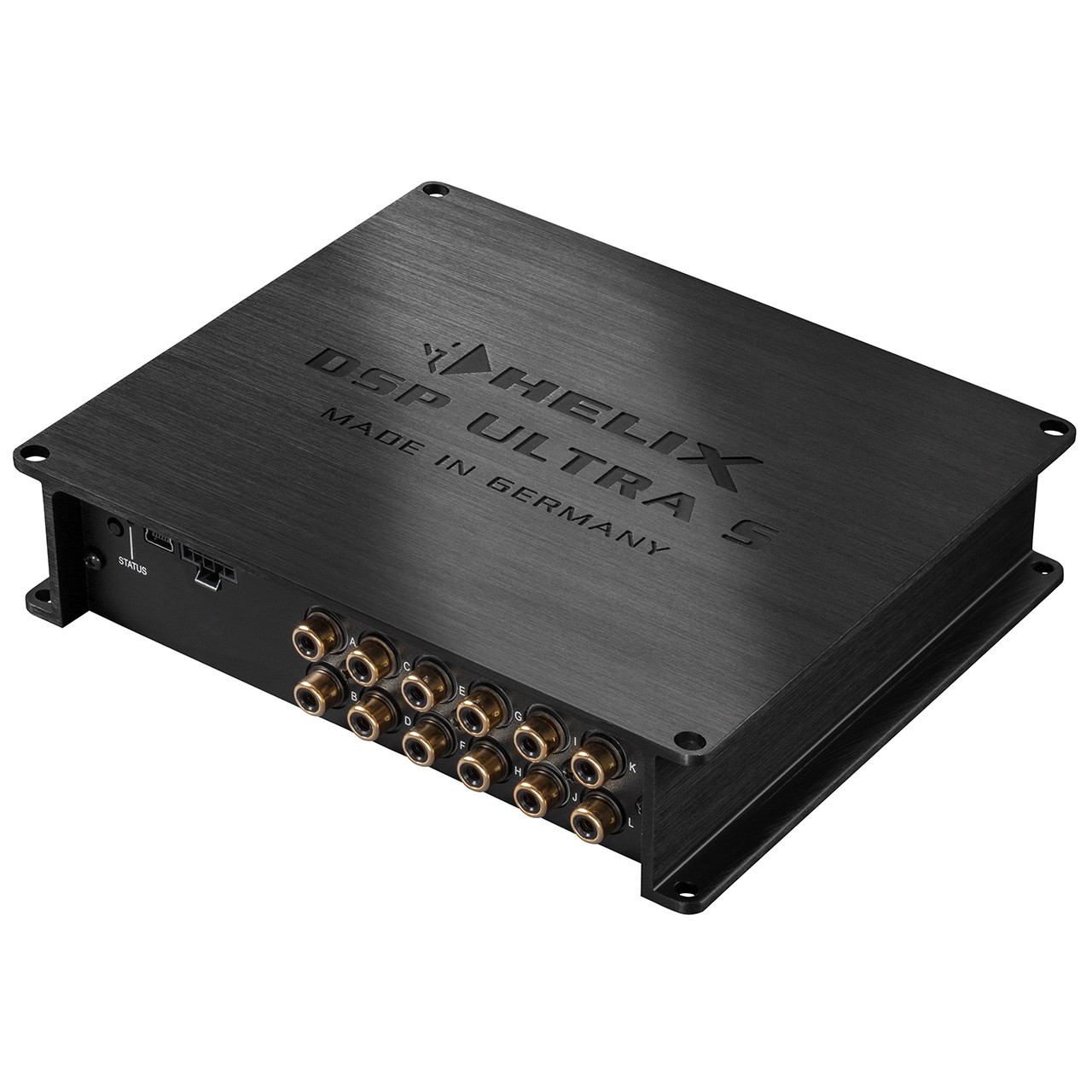
A car cabin is one of the worst listening rooms imaginable — glass, leather, odd angles, and a listening position jammed into a corner. A digital signal processor (DSP) fixes what physics breaks: arrival times are aligned so both sides of the stage reach you together, frequency response is corrected for the cabin, and levels are staged so vocals sit where the windshield meets the dash, not in a door panel.
Who it's for
Anyone whose system has great parts that never gelled. New builds leaving our shop — every one is tuned before delivery. Systems installed elsewhere that need a professional calibration. And audiophiles chasing the last ten percent: staging, imaging, and tonal accuracy you can point to with your eyes closed.
Representative work
Behind the tune
How it works
The process
Listen
We audition your system together and note what's wrong — thin vocals, low stage, no center image, boomy bass.
Assess
We verify wiring, polarity, levels, and crossover points. Bad foundations get fixed before any tuning starts.
Measure
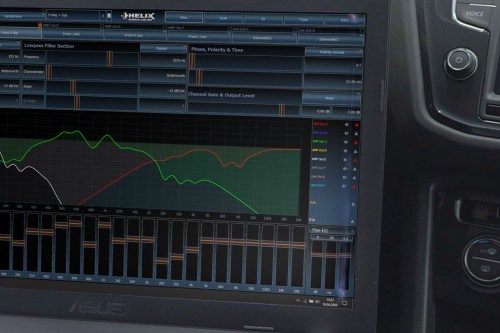
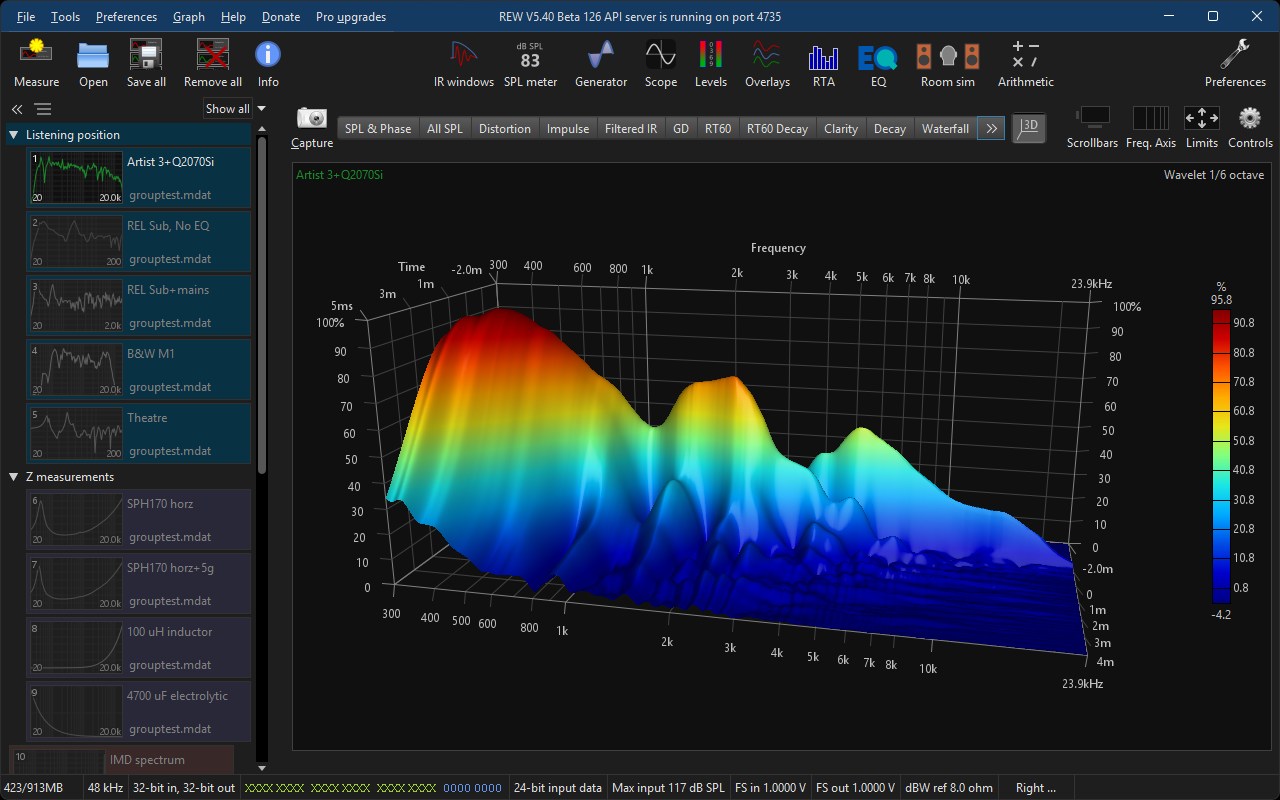
RTA measurement at the listening position: time alignment, per-channel EQ, and crossover optimization.
Voice
Instruments get it accurate; ears make it musical. We finish with reference tracks — and yours.
Questions
Tuning FAQ
What does a DSP actually do?
It processes each speaker's signal independently — delaying arrival times so the sound from every speaker reaches your ears together, equalizing the response your cabin distorts, and managing crossover points so every driver plays only what it plays best.
Do I need new speakers before a tune is worth it?
Not necessarily. If your equipment is fundamentally sound, calibration alone can be the single biggest improvement per dollar in car audio. If a component is genuinely holding the system back, we'll tell you — and tune around it or replace it, your call.
Will a DSP work with my factory head unit?
Yes. Modern processors accept factory signals, undo the factory's built-in equalization, and rebuild a clean full-range signal. It's the backbone of every OEM+ system we build.
How long does a professional tune take?
Plan on several hours for a full calibration — more for complex multi-amp systems. It's booked as dedicated shop time: one car, one tuner, no clock-watching.
I changed equipment since my last tune. Do I need a retune?
Yes — a tune is built around a specific set of gear in a specific car. Change speakers, amplification, or treatment and the calibration should follow. Retunes for systems we built are quicker than starting fresh.
Tuning is booked as dedicated shop time and quoted by system complexity — one car, one tuner, no clock-watching. We’ll scope it during your consultation.
Let’s talk about your car
Tell us what you drive and what you want it to sound like. We’ll come back with a plan — gear, fabrication, timeline, and a real number.